How to Build Your Targeted Customer Profile: The Micro-SaaS Founder's Data-Driven Approach
Building a targeted customer profile is crucial for micro-SaaS success, but most founders rely on guesswork. This guide shows you how to use data and research to create customer profiles that actually drive growth and acquisition.
How to Build Your Targeted Customer Profile: The Micro-SaaS Founder's Data-Driven Approach
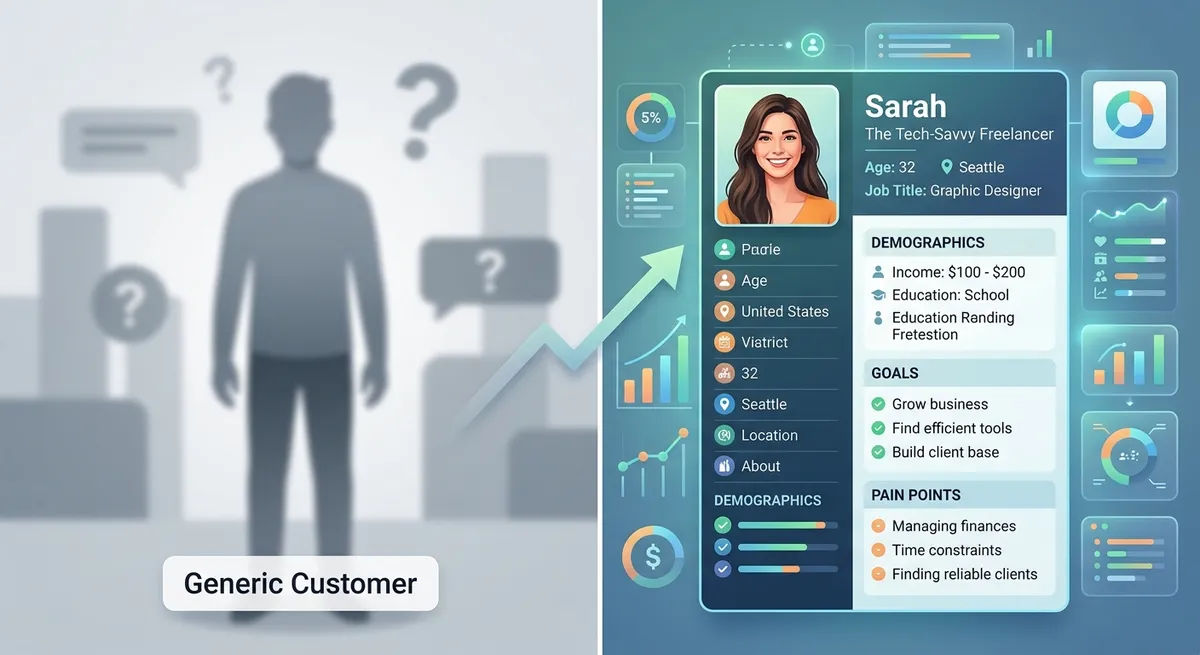
Your targeted customer isn't just "small business owners" or "freelancers." A truly effective targeted customer profile goes deep into demographics, behaviors, pain points, and motivations that drive purchasing decisions. For micro-SaaS founders, this precision makes the difference between burning through your marketing budget and building a sustainable acquisition engine.
Most indie founders skip this crucial step or create vague personas based on assumptions. The result? Marketing campaigns that miss the mark, content that doesn't resonate, and customer acquisition costs that eat into your runway.
Why Generic Customer Profiles Kill Micro-SaaS Growth
When you're bootstrapping a micro-SaaS, every marketing dollar counts. Generic profiles lead to scattered messaging that speaks to everyone and converts no one.
Consider two approaches: "Our project management tool helps teams stay organized" versus "Our async project tracker helps remote design agencies manage client revisions without endless Slack threads." The second speaks directly to a specific targeted customer with a clear pain point.
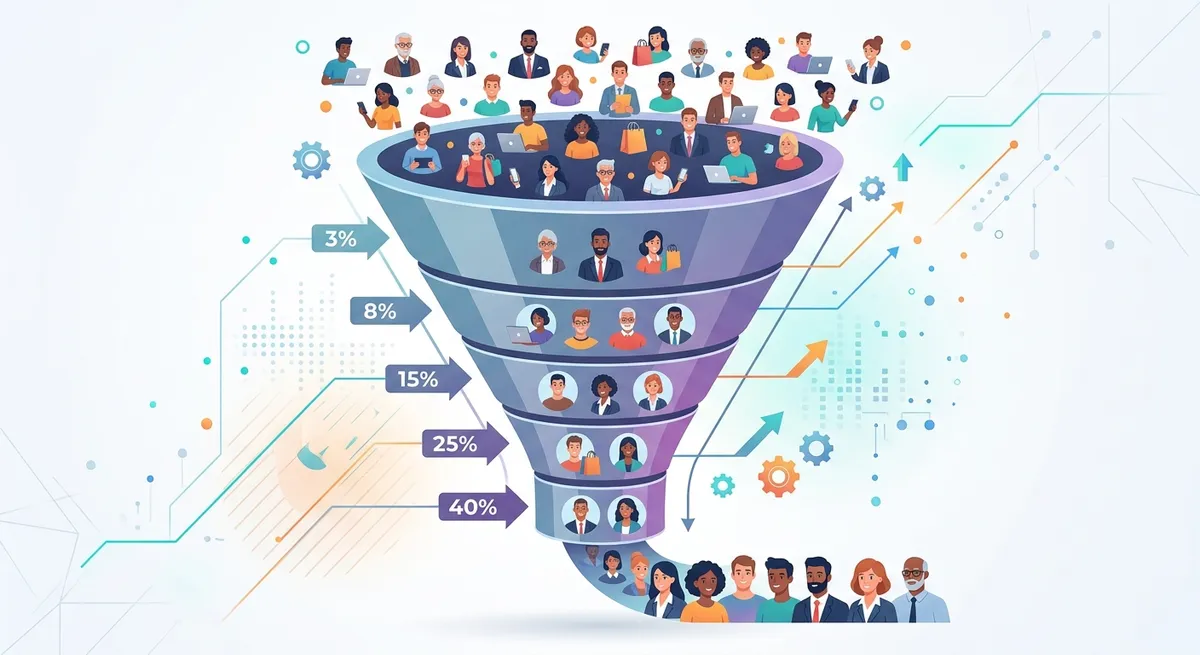
Generic profiles also make it impossible to choose the right marketing channels. Should you focus on LinkedIn, Twitter, or industry forums? Without knowing exactly where your ideal customers spend time, you're playing expensive guesswork.
The Four-Layer Targeted Customer Research Framework
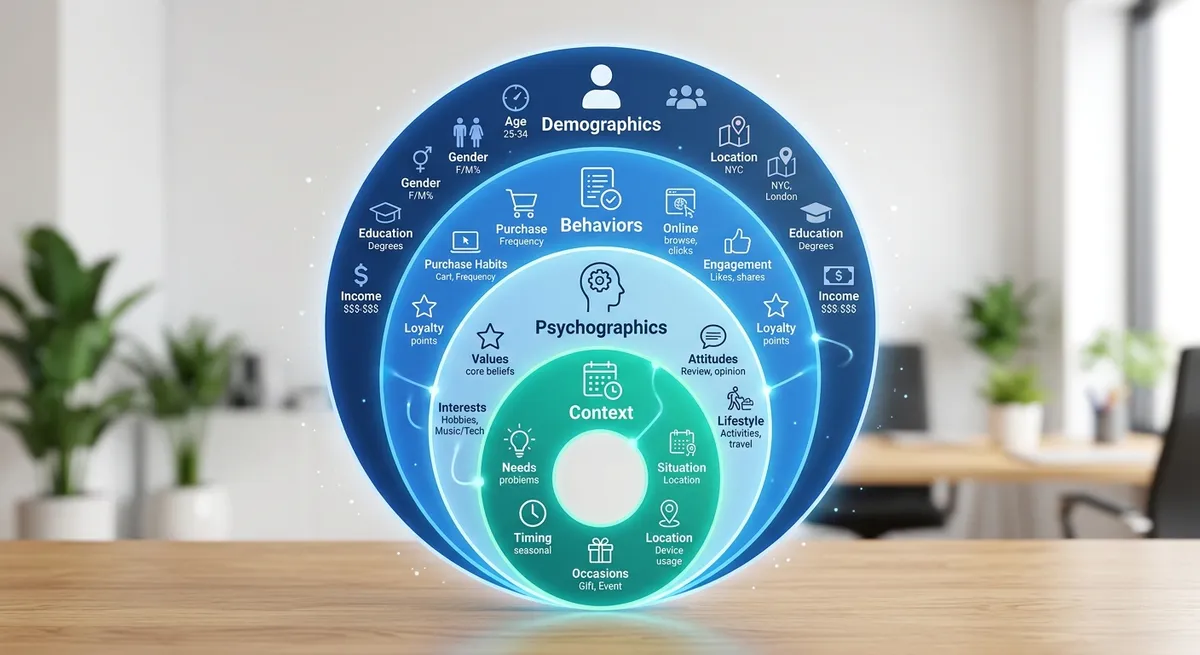
Building an effective client avatar requires systematic research across four distinct layers. Each layer builds on the previous one to create a complete picture of your ideal customer.
Layer 1: Demographic Foundation
Start with the basics, but go beyond age and location. For B2B micro-SaaS, focus on:
- Company size and revenue range
- Industry and sub-industry
- Job title and seniority level
- Team structure and reporting relationships
- Technology stack and existing tools
- Budget authority and decision-making process
For B2C products, consider household income, life stage, education level, and career trajectory. Don't just collect this data—understand how each factor influences buying behavior.
Layer 2: Behavioral Patterns
This layer reveals how your targeted customer actually behaves, not how they say they behave. Key areas to investigate:
- Daily workflows and pain points
- Current solutions and workarounds
- Information consumption habits
- Social media and community participation
- Buying cycle and evaluation process
- Trigger events that create urgency
Behavioral data often reveals surprising insights. You might discover that your target customers primarily research solutions during specific times of day or that they trust peer recommendations over expert reviews.
Layer 3: Psychographic Motivators
Understand the deeper psychological drivers behind customer decisions:
- Core values and priorities
- Professional aspirations and fears
- Risk tolerance and change adoption patterns
- Communication preferences and language
- Status symbols and social proof influences
- Decision-making style (analytical vs. intuitive)
This layer helps you craft messaging that resonates emotionally while addressing logical needs.
Layer 4: Context and Constraints
The final layer captures the situational factors that influence your customer's ability to buy and succeed with your product:
- Seasonal business cycles and busy periods
- Regulatory or compliance requirements
- Integration needs and technical constraints
- Internal approval processes and stakeholders
- Competitive landscape and switching costs
- Success metrics and evaluation criteria
Research Methods That Actually Work for Bootstrapped Founders
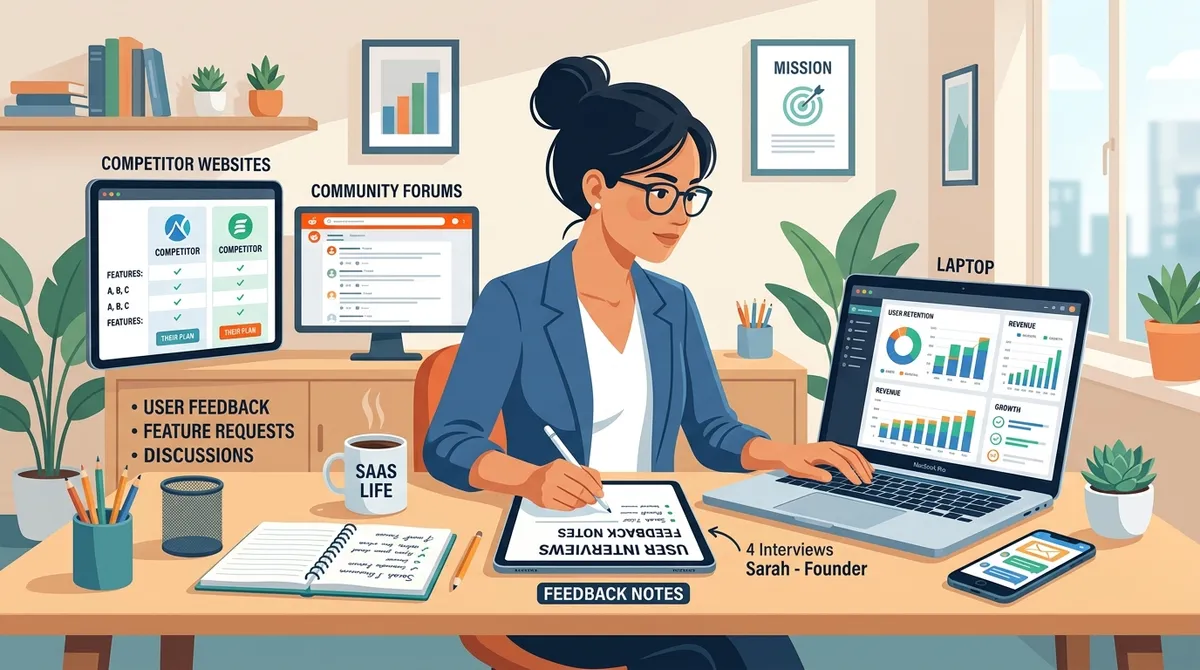
You don't need expensive market research firms to build accurate customer profiles. Here are proven methods that work on a micro-SaaS budget.
Customer Interview Mastery
Customer interviews remain the most valuable research method, but most founders do them wrong. Instead of asking "What features do you want?", focus on understanding context and behavior.
Great interview questions include:
- "Walk me through your typical Tuesday morning workflow"
- "What happened right before you started looking for a solution like ours?"
- "How did you evaluate and compare different options?"
- "What almost stopped you from moving forward?"
Aim for 15-20 interviews across different customer segments. Record and transcribe them to identify recurring patterns and exact language your customers use.
Analytics Deep Dives
Your existing data contains customer behavior goldmines. Analyze patterns in:
- User onboarding completion rates by traffic source
- Feature adoption sequences and drop-off points
- Support ticket themes and resolution paths
- Churn timing and exit survey feedback
- Upgrade patterns and revenue expansion triggers
Look for correlations between user characteristics and successful outcomes. These insights often reveal your most valuable customer segments.
Competitive Intelligence
Study your competitors' customers, not just their features. Monitor:
- Customer testimonials and case studies
- Social media mentions and community discussions
- Review site feedback and complaints
- Pricing page positioning and messaging
- Content topics and engagement patterns
This research reveals market gaps and unmet needs your targeted customer still faces.
Community Infiltration
Join the online and offline communities where your ideal customers gather. Don't sell—just listen and learn. Pay attention to:
- Language patterns and industry jargon
- Frequently asked questions and pain points
- Recommended solutions and tools
- Success stories and failure case studies
- Emerging trends and future concerns
This ongoing research keeps your customer understanding current and reveals new opportunities.
Turning Research Into Actionable Customer Profiles
Raw research data means nothing until you synthesize it into actionable profiles that guide your go to market decisions.
The One-Page Customer Profile Template
Create a single-page profile that includes:
Customer Snapshot: Name, photo, and one-sentence description Demographics: Key characteristics that affect buying behavior Day in the Life: Typical workflow and major pain points Goals and Motivators: What drives their decision-making Buying Process: How they evaluate and purchase solutions Success Metrics: How they measure solution effectiveness Messaging Framework: Key phrases and value propositions that resonate
Validation and Iteration
Your customer profile is a hypothesis that needs constant testing. Validate through:
- A/B testing different messaging approaches
- Monitoring conversion rates across customer segments
- Tracking customer satisfaction and retention metrics
- Regular customer feedback and interview cycles
- Analyzing which profiles generate the highest lifetime value
Update your profiles quarterly or whenever you notice significant changes in customer behavior or market conditions.
Common Targeted Customer Profile Mistakes to Avoid
Even well-intentioned founders make critical errors that undermine their customer research efforts.
The "Everyone is My Customer" Trap
Trying to serve everyone serves no one effectively. A tight client avatar may feel limiting, but it enables focused messaging and efficient marketing spend. It's better to own 100% of a small market than 1% of a large one.
Confusing Features with Benefits
Customers don't buy features—they buy outcomes. Your targeted customer profile should focus on the results they want to achieve, not the capabilities they need. Frame everything in terms of their success, not your product.
Static Profiles That Never Evolve
Customer needs and markets change constantly. Quarterly profile reviews should be standard practice. New competitors, economic shifts, and technology changes all affect customer behavior and priorities.
Ignoring the Non-Decision Maker
In B2B sales, the person who uses your product often isn't the person who buys it. Create profiles for both users and buyers, understanding their different motivations and success criteria.
Scaling Customer Research as You Grow
As your micro-SaaS gains traction, your customer research needs to scale beyond founder-led interviews. Build systems that automatically capture customer insights through surveys, behavioral tracking, and feedback loops.
Consider implementing Net Promoter Score surveys, exit interviews, and regular customer advisory board sessions. These practices ensure your understanding of your targeted customer stays current as your product and market evolve.
The goal isn't perfect customer profiles—it's profiles that are accurate enough to drive better marketing decisions than your competitors. Start with the framework above, then iterate based on what you learn from actual customer interactions and campaign performance.
Key Takeaways
- Build targeted customer profiles using four layers: demographics, behaviors, psychographics, and context to create a complete picture
- Use customer interviews, analytics, competitive intelligence, and community research to gather accurate data on a bootstrap budget
- Focus on understanding customer outcomes and success metrics rather than just feature preferences
- Create one-page actionable profiles that guide messaging, channel selection, and product decisions
- Validate and update your customer profiles quarterly to keep them relevant as markets evolve
- Avoid the "everyone is my customer" trap—tight targeting enables more effective marketing and higher conversion rates
- Research both users and buyers in B2B scenarios since they often have different motivations and success criteria